The violence that hit Gulu City on December 6 during presidential candidate Robert Kyagulanyi’s gazetted rally has shaken the northern regional city to its core.
Many residents now openly say the violence and the looting that ensued has soiled the reputation of the NRM party, vilified its cadres, mobilisers and radically reshaped their voting choices.
The residents say what unfolded in Gulu was not simply a breakdown of law and order, but gross political miscalculation which may spell long-term consequences for NRM party fortunes in the regional city and wider Acholi sub-region.
These dim views are being expressed not only by opposition supporters, but also NRM party adherents through multiple social media platforms and everyday street conversations.
Perhaps these acerbic criticisms came out most fiercely through the Mega FM political talk show on Saturday, a week after the chaos.
The outrage is not manufactured; it is raw, emotional, and deeply personal. Blood was spilled in a city long known for calmness and political tolerance. But two lives were reportedly lost in the violence, including that of Joshua Leon Otim, a 16-year-old student of Excel High School in Mukono.
Otim, who had gone to attend NUP party presidential candidate, Bobi Wine’s political rally on the day, was the son of late UPDF officer, Maj Augustine Anywar. 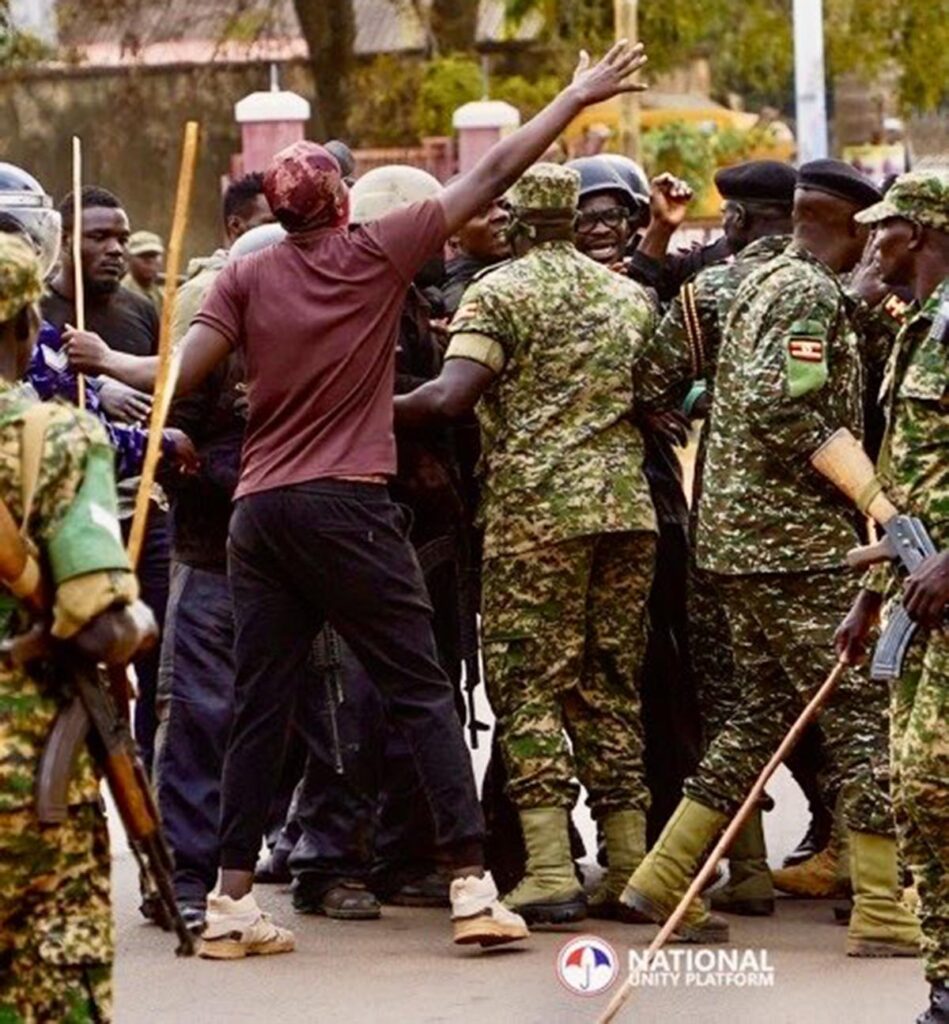
Premeditated violence
But this violence was designed and did not begin on December 6. In the wee hours of Thursday morning, on December 4, NUP party branch offices in Gulu City were broken into and ransacked, allegedly by youths rallied by leaders professing loyalty to NRM party.
NUP party documents, campaign materials, and office furniture were destroyed and scattered about. Yet no arrests and no clear accountability followed from the law and order agencies.
Many Gulu City residents saw this as an early warning that peaceful political competition in Gulu was sliding into rowdy, coercive, vicious, and deadly game.
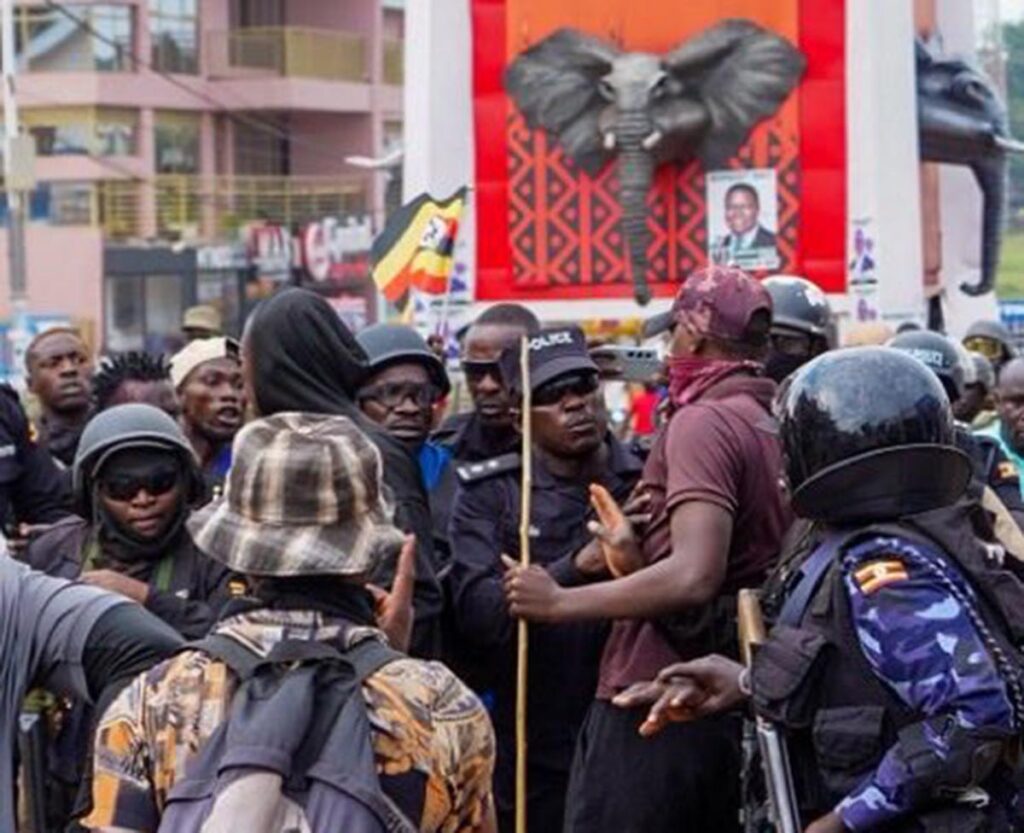
On December 6, the police did not only fail to enforce law and order, but watched and enforced the chaos – cruel beatings and looting and disruption.
The police appeared to protect plain clothed operatives when they ducked behind them for protection when the civilians faced them to defend themselves agains the whippings.
On the same day of the violence, a parallel gathering organised by Mr Martin Ojara Mapenduzi, the MP for Bardege-Layibi Division, took place barely 200 metres from the Bobi’s planned rally venue without question from the police.
Mr Ojara assembled more than 500 boda boda riders. He confessed to organizing these numbers and convening the meeting during a press conference he held at Taks Centre in Gulu City on December 10, raising serious questions about his judgment, timing, and political intent on the D-Day.
Strangely, the NRM Ghetto Youths, alongside security forces, reportedly beat NUP supporters at will, blocked access to the rally venue, while the boda boda cyclists with yellow helmets and T-shirts adorned with candidate Museveni image, raced and roared on Gulu City streets as security agencies watched.
Crucially, the chaos in Gulu City came with several more warning signs. Days before December 6, numerous TikTok videos posted by the spearheads of street gangs locally known as ‘Aguu’, openly threatened the people planning to attend Bobi’s rally.
In several of these videos, known faces and hardline NRM mobilisers wearing NRM T-shirts bearing President Museveni’s image, vowed to block Bobi’s rally and harm his fans.
Similar videos appeared on the day of the rally and afterward, some featuring delinquent youths, crying out that they had not been fully paid for their violence in the city.
In the aftermath of all these, the police offered lame justification for the violence. They claimed Bobi “diverted his route.” Yet we know campaigns in Uganda have always involved negotiations, adjustments, and last-minute changes.
For instance, in Masindi town, the Assistant Registrar of the High Court adjourned all hearings set for December 10, because NRM presidential candidate Museveni was set to hold a rally at the Masindi Golf Course, opposite the the Masindi High Court, which would disrupt access to the court premises.
So, even if a route deviation occurred in the case of Bobi, it did not justify the inhuman and cruel beatings, the unleashing of mobs and killing. Route and venue management requires professional crowd control, not force.
What further complicates the narrative is that Bobi had held largely peaceful and successful rallies in the East Acholi districts of Kitgum, Pader, Agago, and Lamwo. Why were the disruptions concentrated in West Acholi districts of Nwoya, Amuru, and Gulu City?
This pattern suggests that what happened in Gulu was not a national directive, but a localised political failure driven by overzealous local NRM party actors who misread both the moment and the mood of their people.
Beyond politics, Gulu City has invested heavily in branding and marketing itself as a lovely, safe, vibrant commercial and tourism hub, including hosting flagship events such as the recent successful international October Fest, the annual Gulu City Marathon on December 6.
But all these wins were virtually wiped out in a single day. Years of image-building were undone by hours of disorder shared widely on social platforms and mainstream media.
Flashback
This imported primitive violence is not in the culture of political competition in Gulu and wider Acholi sub-region.
Gulu has always been different. For decades, even at the height of 20 years of LRA war and political tension, Gulu City maintained a culture of restraint, tolerance, and political maturity.
Opposition leaders, from Paul Kawanga Ssemogerere, Dr Kizza Besigye, Aggrey Awori, Amama Mbabazi to Patrick Oboi Amuriat, all held political rallies in Gulu without parallel mobs, bloodshed, and without security forces appearing partisan.
NRM party reversals
But the December 6 sponsored violence against Bobi Wine, his supporters, and innocent residents of Gulu City has walked the NRM right into a chastening Acholi proverb that agulu pii too i dog-gola, rendered as the water pot breaks on the brink of doorway.
For the first time in nearly 40 years, the NRM party had begun to regain cautious support in Gulu and wider Acholi sub-region.
Through infrastructure, relative peace, and generational change, skepticism was slowly giving way to engagement. Instead of protecting these gains, the mindless, uncouth and fanatic NRM leaders in Gulu squandered them at the very peak of election momentum.
So, could the NRM political wins in Acholi be beginning to unwind, tumble and collapse on the threshold of the crucial January 2026 General Election?
Caesar Lubangakene is a researcher and founder of Gulu Devt, a community-based organisation in Gulu City.